
Microwave Oven Repair in Nairobi and Kenya: 5 Notable Service Providers
A microwave that hums but does not heat, sparks inside, or has a door that will not latch properly needs
The General updates section is your central source for current developments, platform changes, service highlights, and short-form announcements that keep Nairobi Online’s community informed and engaged. It combines timely news about site features, content highlights from our blog and directory, operational notices for service providers, and brief industry signals that affect home services, moving, and facility management. The tone is authoritative but conversational—written to be quickly scannable, useful to both consumers and providers, and optimised for search and social sharing. Posts will be short-to-medium length (200–900 words), prioritising clarity, actionability, and relevance while linking to deeper guides or service pages when readers want more detail.
What we publish
Platform updates: rollouts, UI improvements, new search filters, or directory features that change how users find or list services.
Service announcements: additions or changes to categories (e.g., new appliance repair sub-services), updated booking options, or partner integrations.
Industry briefs: short analyses of supply, pricing, or regulatory changes that impact home services and facility management.
Community notices: featured providers, customer-impacting incidents, scheduled maintenance windows, and event recaps.
Quick tips and alerts: seasonal reminders (e.g., pre-rainproofing checks), safety advisories, and urgent service recommendations.
Editorial style and structure
Headline: clear, SEO-focused, and under 12 words.
Lead (1–2 sentences): states the update’s main point and relevance.
Body (3–6 short paragraphs or bullet lists): explains what changed, why it matters, who’s affected, and next steps.
Action box (bullet list): contact links, booking buttons, or where to find more details.
Related links: internal links to services, longer guides, or partner pages.
Metadata: publish date, relevant tags (e.g., Appliance Repair, Moving Services), and short excerpt for social sharing.
Frequency and timing
Cadence: posted as events occur—minor updates 1–2 times weekly, larger product or industry updates as they arise.
Priority: customer-impacting notices (outages, safety alerts) published immediately with clear timestamps; informational updates batched for a weekly digest when practical.
Evergreen vs time-sensitive: every post is marked accordingly so readers know whether an update requires immediate action.
Search optimisation and discoverability
Keywords: combine high-intent service terms (e.g., “carpet cleaning booking”, “wheel alignment Nairobi”) with topical modifiers (e.g., “update”, “new”, “notice”).
Structured data: use schema markup for NewsArticle and FAQ sections where appropriate to increase visibility in search results.
Internal linking: each update links to relevant service pages and deeper guides to improve dwell time and conversion paths.
Social-ready excerpts: include a 1–2 sentence social excerpt and suggested hashtags for immediate sharing.
Audience segmentation and tone
Consumers: clear instructions, impact summary, and contact points, using plain language and short action steps.
Service providers: operational notes, listing changes, and policy updates with precise technical detail where needed.
B2B partners and industry readers: analytical notes and links to formal documentation or event briefings.
Tone: professional, concise, and helpful; avoid jargon without explanation. Use bullets and tables for quick reference.
Example post templates
Immediate notice template: headline, 2-sentence impact summary, one-line what we’re doing, estimated resolution time, contact information.
Feature rollout template: headline, what’s new (bulleted), benefits for users and providers, how to access, and troubleshooting tips.
Industry alert template: headline, short context, direct implications for users/providers, recommended actions, and links to external regulation or guidance.
Visuals and media
Use one header image or graphic per post (platform screenshot, event photo, or illustrative icon).
Include short embedded videos or GIF walkthroughs for UI changes or booking flows.
Where useful, provide a small table summarizing changes (for example: feature, before, after, effective date).
Engagement and community signals
Comments: enable moderated comments for reader feedback and quick clarifications.
Reactions: lightweight thumbs-up or bookmark buttons for readers to signal usefulness.
Provider responses: when updates affect listed businesses, invite them to post verified replies or correction notes directly in the update.
Email/SMS alerts: subscribe options for high-priority notices (outages, urgent safety alerts).
Performance metrics and KPIs
Track open and click-through rates for digest emails, shares on social platforms, and on-page engagement (time on page, scroll depth).
Measure conversion impact by linking updates to booking or contact actions and monitoring subsequent lead volume.
Monitor search referrals and featured snippet occurrences for SEO effectiveness.
Editorial governance and verification
Ownership: each update is assigned an author and an internal reviewer from the operations or product team depending on the topic.
Fact-checking: technical claims (equipment specs, regulatory changes) are verified against primary sources or vendor documentation before publishing.
Corrections: clearly visible correction notices are added to posts when factual errors are discovered, with timestamps and brief explanation.
How readers should use this section
Consumers: treat General updates as the fastest route to operational changes—check for service availability, seasonal tips, and urgent notices.
Providers: rely on it for policy, listing, or feature changes that affect how you appear or operate on the platform.
Marketers and partners: use update posts as canonical announcement pages to link from emails, partner portals, or PR materials.
Accessibility and language
Plain-language summaries at the top of each post for readers who need quick context.
Use short paragraphs, descriptive headings, accessible image alt text, and mobile-friendly formatting.
Provide translations where a post affects service providers or a large user segment who prefer another language.
Publishing checklist (quick)
Headline, lead, body, action box, related links, tags, featured image, author, reviewer, publish timestamp, and notification list.
Ensure schema markup is present and social excerpt written.
Nairobi Online publishes General updates to keep all stakeholders aligned and informed—this section is intentionally concise, action-driven, and optimised both for human readers and search engines. It acts as the authoritative ledger for platform changes, service notices, and short industry intelligence that helps consumers, providers, and partners respond quickly and confidently.
A microwave that hums but does not heat, sparks inside, or has a door that will not latch properly needs
Top 5 Companies that Provide Borehole Drilling Services in Nairobi, Kenya Access to a private water source has become less
Vehicle Detailing Service Costs in Nairobi: A Comparison of Providers Vehicle detailing in Nairobi ranges from relatively affordable interior and
Ayurveda, the traditional system of medicine originating from India, has gained significant popularity in Nairobi, Kenya, as an alternative and
Financing a small or medium-sized business in Kenya usually means weighing more than just the advertised interest rate. SME loan
EPRA Location and Contacts in Kenya The Energy and Petroleum Regulatory Authority (EPRA) regulates Kenya's energy and petroleum sectors. EPRA
Anyone looking to hire an electrician in Kenya should understand the difference between electrical training, certification and licensing. While electricians
Common AC Repair Costs Air Conditioning (AC) repair costs in Nairobi vary depending on the issue, AC type, and service
Residential AC Installation Costs The cost of installing an air conditioning system in Nairobi depends on the type of AC,
Split AC installation costs in Kenya vary based on the unit’s capacity, brand, and installation requirements. For a 1-ton split
Cassette AC units are a popular choice for homes and offices in Nairobi due to their sleek design and efficient
Residential HVAC Service Costs HVAC (Heating, Ventilation, and Air Conditioning) service costs in Nairobi vary based on the type of
Cost of Air Filter Cleaning for AC Units Regular air filter cleaning is essential for maintaining the efficiency and longevity
Ask ten different plants what they paid for their automation setup, and you'll likely get ten different answers — not
Every household appliance has a working life, and most of them give warning signs long before they break down completely.
Nikai televisions are common across Kenyan households, largely because of their affordability and wide availability, and like any TV brand,
Searching "plumber near me Nairobi" usually happens at the worst possible moment — a pipe has started dripping under the
Plumbing emergencies don't wait for business hours. A burst pipe at midnight, a flooded bathroom before an early flight, or
Plumber Fundi Nairobi Estate Within Nairobi's residential estates, plumbing work often runs through a familiar, informal channel — the estate
Fund Wa Maji Nairobi When something goes wrong with household water supply — a burst connection, a malfunctioning tank valve,
Drainage systems — whether inside a home or across a compound — need regular clearing to keep water flowing properly,
How to Fix a Leaking Fridge in Kenya A leaking fridge is one of the more common household appliance complaints,
With so many appliance repair technicians and companies operating across Nairobi, choosing the right one often comes down to a
50 Notable Event Planning & Services Companies in Nairobi and Kenya This is a simple guide to event planning and
Nairobi National Park is a unique wildlife conservation area located just seven kilometers from the center of Nairobi, making it
Giraffe Centre in Langata, Nairobi, is one of Kenyas most popular wildlife conservation and education destinations. Established in 1983 by
Giraffe Centre in Langata, Nairobi, is one of Kenyas most popular wildlife conservation and education destinations. Established in 1983 by
Nairobi National Park is a unique protected area located just seven kilometers from the center of Nairobi, making it the
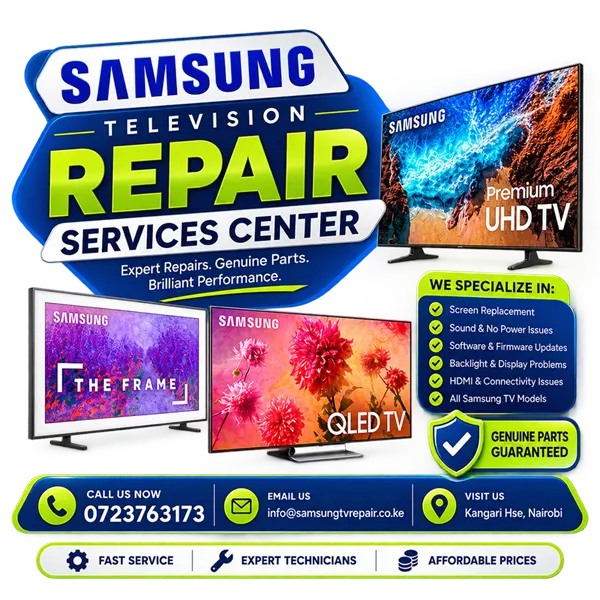
Estimated Costs of Samsung Television Repair and Spare Parts Prices in Nairobi Samsung televisions are widely used for home entertainment,
Hotel Profile The Radisson Blu Hotel, Nairobi Upper Hill is a five-star property that has become one of the city's
Nairobi's taxi-hailing scene has grown far beyond the days when Uber was the only app on anyone's phone. Bolt, Little
Bomet County sits in Kenya's South Rift region, an area known for its tea farms, dairy production, and generally reliable